Trend Alert#3: Pimp my Home
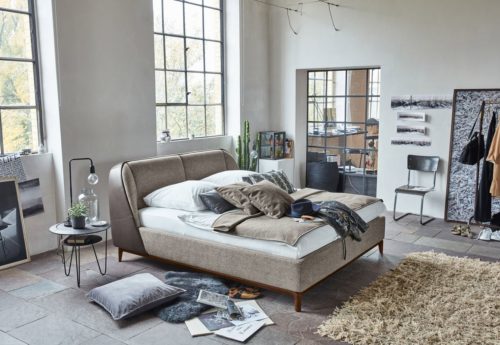
“Pimp my Home” is one of imm cologne’s trend mottos for the coming season. When it comes to creative scope, there’s no place like your own four walls. And there are plenty of accessories and decorating ideas for “pimping” the place up, even on a small budget. There are sure to be plenty of new and exciting ideas to discover at the imm cologne 2012. This trend is:
* Layouts and functional zones are breaking up
* Modern living stands for: anything goes, no musts!
* Above all, furniture has to be flexible
* Furniture is getting smaller
* New materials are making their way into the home
These days, furnishing a home means breaking down the old, traditional boundaries, putting the television in the kitchen area, turning the dining table in the live-in kitchen into command central complete and putting the bathtub in the bedroom. As people’s requirements of their homes have changed, the arrangement of the rooms has undergone fundamental changes as well.
The clearly delimited areas of the past are merging with one another – and have broken away from their old functions. We no longer ask themselves what belongs in our living room, but what we want to do in that space . The “either-or” model of old is being replaced by an emphatic “both-and” approach.
This freedom within our own four walls allows for a huge amount of creative autonomy. One thing is certain: people’s homes are becoming increasingly important to them. New studies show that the home is evolving into the focal point of our social lives. Communication tools like smartphones, netbooks and tablet computers are contributing to the trend to retreat home. If you’re going to spend that much time at home, you want a habitat that’s good for the soul.
As a result, Modern furniture has to fulfill many functions. All in all, furniture is getting smaller again because it can be used for all sorts of different things. Sofas, for instance, can easily be adjusted to create bigger seating surfaces. Desks only need a small work space because the technical equipment is getting smaller, display cabinets can be narrow because the LED lighting doesn’t take up any space. Poufs that can be carried around the home are flexible seating options that fit in anywhere. Tables can be extended in next to no time when friends come for dinner, and flatscreen TVs can be made to disappear into the sideboard at the push of a button.
imm cologne will showcase this trend and Visionary Design: “Das Haus – Interiors on Stage” created by Nipa Doshi and Jonathan Levien. They will shake up the conventional ideas about living.
December 12, 2011 No Comments
Trend Alert#2: Three Marketing Trends for 2012
2012 can bring new opportunities to engage your customers. By looking ahead, you’ll be well-positioned to integrate marketing strategies and take advantage of technology to deliver your brand message. No matter how fashion forward your message is, how on target your products and services are; if you can’t reach the right client it doesn’t matter. Here’s a look at three marketing trends for 2012 to put on your radar screen.
#1 Social Studies: Learning to be everywhere your customers and prospects are.
When, where and how we communicate has changed dramatically in the last five years. Here are some stats I find incredible. Five years ago, Facebook had 12 million users, Twitter was in its infancy and the first iPhone had yet to be unveiled. Today, there are 800 million Facebook users, nearly 200 million Twitter accounts and more than 10 billion Apple apps downloaded, and more coming everyday. Mobile devices, new social networks, and check-in sites and location-based services are adding new wrinkles to the marketing communication mix. Silverpop refers to this convergence of mobile, social, local and email as “mocial.” In a world gone mocial, we will change the way we interact with customers. To get your mocial mojo working in 2012.
• Grow your database through social and mobile. For example, you could add an email opt-in or lead-gen form on your company’s Facebook page, capture emails via SMS or app downloads, and/or use tablets to gather info.
• Design campaigns around the concept of sharing, delivering your strongest call to action at a time that makes sense rather than asking people to share something before they consume it. For example, instead of just including social-sharing icons in an email with a link to a white also insert sharing links within the white paper itself and send an automated follow-up email inviting downloaders to Tweet the best idea they got from your paper.
#2 Actions Speak Loudest: Unlocking the power of behavior.
In the new era of marketing, companies must listen to, learn from and speak to customers and prospects on a one-to-one, personal basis. The focus will shift to widening the scope of information being collected to gain a better understanding of who the key influencers are.
• Sync up your platforms so you can pass data back and forth in both directions more efficiently, better optimize content, and improve communication between sales and marketing.
• Create scoring systems that take your customer and prospect behaviors into account—including social actions such as “liking” you on Facebook, sharing your content to a social network and commenting on Blogs.
#3 Personality Plus: Marketing content becomes more human.
Not so long ago, marketing was all about selling your products and services. Regardless of whether you were selling caviar or consultations; delivering your message in an impersonal voice was just fine. While delivering product news, sales and discounts is still important; expectations have shifted. These days, customers and prospects move effortlessly between your company’s social presence and photos of their best friend’s recent vacation, so stiff corporate messaging that sounds like it was crafted in legalese creates a disconnect. In 2012 the focus will change to delivering helpful, educational content with verve and personality: “Yes, we’ve got sizzling steaks, but here are our staff’s favorite wine pairings for that steak, our guest chef’s video tips for grilling it, and customer recommendations for the most mouth-watering sides to enjoy with it.” It’s time to get real, get human and add value.
• Spend less time talking at your customers and more time paying attention to their behaviors and listening to them via social networks, community forums and surveys. Talk to them the way you would talk to another human being, employing a voice that’s distinctive, engaging and yours.
• Include messages designed simply to inform, entertain, surprise and provide value rather than sell. For example, a packaged goods company might offer favorite recipes from the staff, a technology company could author a how-to white paper that doesn’t hype its own product, and a cruise operator can recommend travel, packing and on-shore dining tips.
• Introduce your self through words and pictures, including stories and anecdotes. Put simply, people like to do business with people.
December 11, 2011 No Comments
Twelve Days of Trends
It’s that time again- the trend pundits are releasing their predictions for 2012. So in the spirit of sharing , I am bringing you 12 Days of Trends. The list includes a bit of everything. I’ll talk trends in color, design, textiles, consumer, marketing, social media and sprinkle in a couple of my own spottings to give you the big picture of what will be affecting you and your business next year. I’m kicking it off with a preview of Heimtextil Trends. Heimtextil, the largest textile show starts the round of design shows January 12, 2012. I’ll be there so watch for daily in depth posts and interviews.
Heimtextil Trend Preview 2012/2013
Montage, Heimtextil’s 2012/2013 trend reflects the thoughts, ideas, inspirations and predictions of the members of the Trendtable. Each year, Heimtextil’s trends are developed by a Trendtable of international designers that review the most important overriding trends and provides valuable orientation and predictions for product developers, creative teams, furnishing specialists and designers. The Trendtable defines Montage as a process that symbolizes the individuality and needs of the consumer. Montage is about taking existing elements, mixing them together to make something new and creating something of our own, something that has never existed before.
The four new trend themes are ‘Colour Riot’, ‘Dark Lux’, ‘Craft Industry’ and ‘Split Clarity’. In all four trends, color plays the dominant role.
“Color is the decisive signal for the coming season. Powerful and omnipresent, color refreshes the senses, sets important accents and is a conscious part of all styles”. Claudia Herke
Overview of the Four New Trend Themes.
‘Colour Riot’: colors in revolt
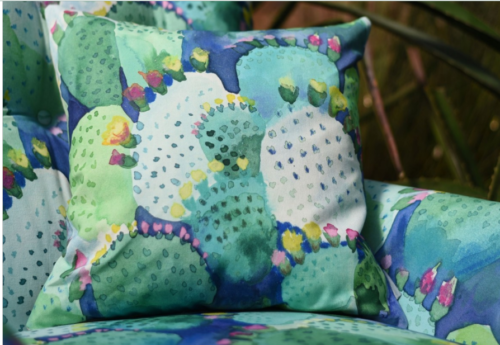
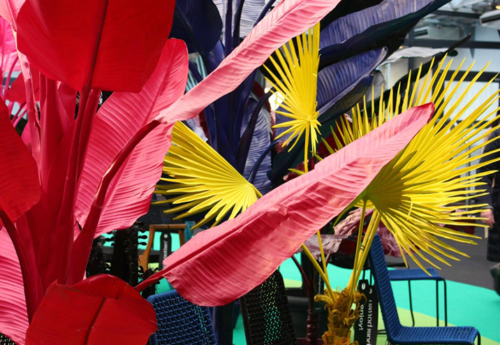
In ‘Colour Riot’, dynamic, shades of color appear in a new context – fresh, bold and vivid. And there are no limits on the interaction with light. High-gloss materials, colored laminations, superimposed motifs, fluid and flexible fabrics underscore the brilliance of monochrome colors. New are ‘optical fibers’, iridescent effects and recycled materials. Quality, wear resistance and longevity are important to these high-grade materials.
When it comes to patterns- look for broad stripes, all-over geometric patterns and graphic motifs The computer world is represented by digital designs, photographic prints and hologram effects. Despite the playful urge to experiment, the unexpected looks appear clear and unequivocal.
Buzz words:
glossy, coated, technical knits, smooth wool, clean felt, graphic patterns, diagonal stripes, pixel optics, overlay geometrics, color blocking, 3D effects, reassembled
‘Dark Lux’: the beauty of the night
The shadows of the night create a dark, mystical and elegant color series dominated by deep black, which is particularly expressive on lustrous materials. Rounding off the color world are dark, colored accents – pepped up by metallic champagne and gold. Rubberised, liquid looks and glossy surfaces interact with furs and long-haired, smooth hides. Clarity and severity give the sumptuous textiles their modern appearance. Iridescent, shimmering and transparent qualities with animated surface modulation generate an air of mystery. Deep gloss, metallic shimmers, sequins and elaborate materials are to be found in almost all product segments.
Buzzwords:
Luster, shadow prints, distorted patterns, embroidery, matelassé, crystals, glossy, leather, new opulence, varnished, 3d laminates, material contrast, elegant + modern architectural inspirations, straight line appliques, irregular reliefs, graphic stitching, graceful strength, metallic shimmer, brocade, vintage
‘Craft Industry’: a blend of tradition, handicrafts and the modern
The combination of tradition and handicrafts on the one hand and industrial and mechanical methods on the other dominate the look of ‘Craft Industry’. A sunny-warm and lively color series is oriented towards natural landscapes with sky, mountains, lakes and forests, which contrast with industrial, metallic coal, copper and old-gold tones.
‘Craft Industry’ shows lively surfaces with irregular textures and lots of structured elements. Important are qualities with an authentic image and materials with vintage character, as well as restrained destroyed and used looks.
Fine patterns are created using creative techniques. The dominant elements include composite or offset checks, extraordinary patchwork designs, broken patterns, stripes and checks with partial pile effects, hand-sewn looks, intarsia and elaborately processed patches.
Buzzwords:
Uncover, industrial past, lively, authentic, vintage, used, structured, reused, tumbled, washed, crashed, waxed, quilted, simple, inserted patches, interrupted pattern, handstitched, folk look, nomadic lifestyle, handmade character, flamed effects, embossed, Shetlands, pile effects, unusual skins, native, genuine, natural,
‘Split Clarity’: the bare essentials
Less is more – ‘Split Clarity’ concentrates on simple, functional and essential elements. In other words, the focus is on sustainability, quality, high technology and new materials. The result is clear-cut, modern aesthetics. Clarity is reflected by a series of colors inspired by nature. The minimalistic and restrained compositions are generally interrupted by a single expressive shade. Material versatility is crucial. Metallic and reflecting surfaces, semi-plain patterns and transparent materials are used, as are animated but restrained surfaces. Linear, high-contrast and severe graphic designs set unequivocal accents. Depth is created by the interaction of light and shadow in different materials and surfaces.
Buzzwords:
Minimal, graphic, functional, intelligent, smart textiles, vibrant surfaces, metallic aspects, severe, constructed, sculptural materials, volume, technological evolution, ultra-light, shiny, immaterial, smooth, faded and pleated, opaque prints, laser-cuts, varied nature of materials, sustainability, quality, hi-tech, new materials, modern, calm, pure
December 9, 2011 No Comments
Stunning Stitchery
My mom and grandmothers passed on their passion for the art of gracious living to me. They introduced me to the decorative and home arts early; teaching me to sew, rosemale and to knit and embroider. I have a healthy respect for the crafts, but I am incomplete awe of these embroidery pieces. The world of craft and art merge into some spectacular needlework. I covet them all and I admit I have embroidery envy!
Amanda McCalvour
“I am interested in the vulnerability of thread, its ability to unravel, and its strength when it is sewn together. I am interested in the connections between process and materials and the way that they relate to images and spaces.”
I am blown away with these embroidery installations. Toronto textile artist, Amanda McCavour moved from drawing fibers and cloth, to actually using them to make her work. Thinking that it would be even more interesting to make a drawing out of thread that might exist in air, she started to experiment with water soluable fabric. It turned out to be the perfect tool.
Drawing on her memories of an old apartment, the life size installation, Stand in For Home allowed her to re-visit, remember and re-create a space that was once called home.
Amanda draws out her images on the fabric before sewing; drawing the outline and then blocking in areas that will be different colors of thread. She treats the embroidery like a drawing, moving from light to dark, like shading with thread. McCavour sews with a sewing machine on the water soluable fabric. Sewing so close together so that the thread image begins to hold itself together; she dissolves the base, leaving just the thread image behind.
Daniel Kornrumpf
Massachusetts artist Daniel Kornrumpf uses embroidery as a medium for his portraits. Making it even more out-of-the box, he does portraits of people he doesn’t know, but have posted photos of themselves online.
Michelle Ann Mathews
Photographer, artist and graphic designer Michelle Ann Matthews is clearly multi-talented. A photographer that has become intrigued by the mundane and anonymous spaces in the landscape she started photographing the “negative utopia” of the urban landscape- the in between places, that beckon to the past and the future.
Recently, she became equally enamored with embroidery and its relationship to photography which has resulted in an embroidery series of her photos she titles Urban Fabric.
“ I am intrigued by embroidery’s relationship to human culture, while also looking at a way to change our reading of photography by rendering a photograph into a tactile object.”
Works in the embroidery series feature snapshots of night construction, a stack of crates at a building site, , a park by the freeway and an abandoned Kmart.
At first from a distance these works read as photographs. It is only when you look closely do you see the thread. The Urban Fabric materialize in tens of thousands of stitches, and the thread replaces the photographic pixel.
Cayce Zavaglia
Cayce’s work is a nod to the tradition of tapestry and her love of craft. Using wool yarn instead of oils, Zavaglia creates a dialogue between portraiture and process as well as proposing a new definition for the word “painting”. Although the medium is crewel embroidery wool, the technique borrows more from the worlds of drawing and painting.
Cayce explains her technique: “Initially, working with an established range of wool colors proved frustrating. Unlike painting, I was unable to mix the colors by hand. Progressively, I created a system of sewing the threads in a sequence that would ultimately give the allusion of a certain color or tone. The direction in which the threads were sewn had to mimic the way lines are layered in a drawing to give the allusion of depth, volume, and form. Over time the stitches have become tighter and more complex, but ultimately more evocative of flesh, hair, and cloth.”
December 7, 2011 No Comments
Sneak Peek of Paris Deco Off
December 4, 2011 No Comments